
 |
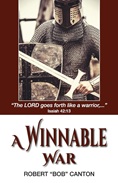
Canton, a Charismatic Catholic, recalls his experiences battling demonic forces over the span of several decades. "We are at war!" he declares in the opening lines, and then cites a number of recent events as evidence that humans are engaged in a spiritual battle between good and evil, among them a famous tableau at the opening of the 2024 Paris Olympics that seemed to parody the Last Supper. Some of his examples are striking. He writes that in February 2023, residents of São Paulo held a "satanic festival" featuring a performer dressed as Satan brutally whipping a figure dressed as Jesus. The following day, floods and storms killed thirty-six. For Canton, this is a clear demonstration of St. Paul's words: God will not be mocked.
Much to his credit, Canton seems more interested in the healing power of God than he is in the nefarious workings of Satan. During his years in ministry, he's witnessed a number of instances in which the possessed were delivered, the blind obtained sight, and the wheelchair-bound rose and walked. His accounts of these events can be quite dramatic. During a visit to the Blessed Sacrament Church in Kuching, Malaysia, he saw a woman carried into the church by six men. When he approached, the woman attempted to hit him. He prayed for Jesus to release her from "sleeping spirits and spirits of escapisms" and she was delivered. Canton was also approached by a man yelling, "I'm going to kill you." But when Canton prayed, the man became immobilized. Awed by the power of God, this man—who had dabbled in Tarot cards, Ouija boards and drugs—began attending Mass and praying the Rosary daily. At the heart of each story is a belief in the power of words to kill and to heal: "With words," he writes, "things and circumstances can be called into existence; and with words, they can be destroyed."
From an anthropological perspective, Canton's book is fascinating. Readers who are only familiar with the non-Catholic branches of the Charismatic movement may be surprised to find that that there is a Catholic version of it also. Canton proves that he is well-read and a student of ecclesiastical history. For example, the book is peppered with quotes from popes and councils dating back to the early Middle Ages, such as the citation of the Second Council of Braga in 562 on the parasitic nature of evil. One familiar trap he manages to avoid is the temptation of ascribing to Satan more power than he really possesses. Books of this nature frequently err in making the devil all-powerful, a sort of Manichaean rival to God. Canton is keen to stress that the devil is a defeated foe. In this, too, his outlook hearkens back to the Middle Ages, when English bishops spun tales about St. Dunstan pinching the devil's nose with a pair of tongs. Canton captures the spirit of those old stories when he calls Satan "a perpetual loser." Twentieth-century folk theology too often elevated Satan to the center of theology; Canton shows readers a better way. This is a worthy addition to the growing corpus of contemporary Catholic and Charismatic literature.