
 |
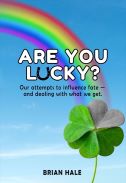
Are You Lucky? Our Attempts to Influence Fate—and Dealing with What We Get
by Brian Hale
Book Domain
In this thought-provoking examination of the concept of luck, Hale dives into its history and etymology. His research into the subject concludes, "Much of luck's linguistic trail, as a word, is traced back into the Dark Ages." In his quest to define luck, he develops four major categories or sources of luck: divine intervention, response to your own life choices, responses to the physical forces of nature, and pure dumb luck. Each of these is fully addressed in subsequent chapters that include study questions. Using examples from his own experiences and research, he fully explores and addresses concepts pertaining to luck, such as astrology, superstition, numerology, karma, and human instinct. Hale's final chapters present reflections on the discoveries made while writing the book, and his own conclusions about the concept.
Hale presents an interesting study in his endeavor to define luck. Writing in a conversational tone, the author fully engages the reader from beginning to end. Linguistics buffs will especially enjoy his extensive look at the word's origins and the many synonyms used to describe luck. He fully explores how the concept of luck, both good and bad, permeates modern life. It is an idea implanted in the human mind from the time when the young child learns to avoid cracks to keep their mother safe. Whether one believes that luck plays a role in what happens in everyday life or that it is merely an amusing concept, there is plenty addressed here to inform and entertain. Hale brings a concept that permeates all cultures in various forms to the forefront in this intriguing study. It is a fascinating read that shouldn't be missed.