
 |
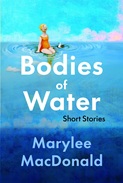
Every story in this collection features water. Lakes in Arizona and Japan, a river in India, and the ocean are some of its settings. In "Drought," not enough water is a problem, while in "The Ark Encounter," too much is. In all the stories, water is a vehicle, literally and figuratively, in big and small ways, to change.
In several stories, characters speak different languages and travel the world seeking diversion. In others, characters are stuck—in wheelchairs, in relationships, or with depression. Some stories are in the first person, some in the third. The protagonists are young and old, male and female, content and discontent. The variety of characters, conflicts, perspectives, and settings makes their turning points unpredictable and compelling.
"Some Were Rabbits," the second story, sets a precedent for the unexpected. A single mother competing with her rich ex-husband to meet her daughter's needs (and some of her desires) schemes with Bosnian workmen at her apartment building to kill the horse her husband purchased for the daughter's amusement. The friendship they accomplish supplants this plan. A yoga student taking a class in India, in "Sacred Shores," finds the opposite of the change she sought. In the "Hibernian," the main character tries to convince crew members to stay on instead of quitting their lucrative oil rig work, saying, "…but there's nothing else landside that pays like this." He fails to convince himself. His line is impactful and artful, springing up out of descriptions of the ship's tight quarters and physical, unspoken tensions between colleagues. The water on which they live keeps them afloat and also grounds them in isolation and escape. The stories' rich world-making succeeds in developing every character's change of heart in ways that are relatable and intimate.
While not all the resolutions are happy, a focused direction toward movement and transformation is hopeful and dynamic. A couple reuniting in Japan after a long separation finds peace at the cost of comfort. A few stories feature orphans whose origins influence their relationship patterns. Like the waters one orphan sails in "Harbor People," never being settled is an acceptable option. With varying outcomes, the book's language is accessible and empathetic.
Twin conflicts of climate collapse and relationship demise are themes in many stories. In "The Ark Encounter," a relative's home is a refuge from a hurricane as well as from hopelessness. Like the protagonist in this story, characters develop in tandem with the changing environments around them. The narrator in "Drought" decides to move in response to the shrinking lake and his own desire for a more meaningful life. Caring for a stepfather after her mother dies, the daughter in "The Banana River" changes her mind about him when he remembers all the lyrics to a lilting song. Characters affect each other, as do settings and characters. The writing is sensitive.
The attentive prose describes gestures, quirks, and employs biting dialogue to match cityscapes, shifting weather, and room decor. The result is a living being that encompasses man and nature, with each affecting the other in equal measure. The book's tone is buoyant, flexible, and compassionate, using water as a metaphor to convey whatever it means in context.
RECOMMENDED by the US Review