
 |
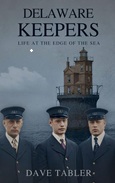
This title reveals the inspiring history of Delaware's lighthouses and the men and women who served as keepers, assistants, and mechanicians of the flames and automated lights that guided ships along Delaware's dangerous, shifting shoals and powerful tides. Well researched and written with a deep regard for the subject matter, the book wends its way through nearly two hundred years of history, from the first appointment of a keeper at Cape Henlopen Lighthouse in 1769 through the complete automation of lighthouse beacons along Delaware's shores in the mid-twentieth century.
Delaware's small size and compact coastline made it possible for lighthouse keepers to be an integral part of their local communities because their beacons and homes were fairly close to town even as their occupational duties kept them somewhat isolated. The author delves deeply into the human and communal aspect of these quiet but important lives, bringing the relevance of these positions into clearer focus with the descriptive skill of a consummate historian. Tabler writes: "The lighthouse keeper as a solitary, storm-battered figure seemed increasingly at odds with fragments of evidence I encountered in Delaware newspapers—keepers hosting wedding receptions, organizing concerts, running for local office."
Quite often the men who served as keepers brought their wives and families with them, and in the early days, some families were quite large. Wives and children often learned the keepers' routines and became unofficial, unpaid workers who substituted for the official keeper when illness and irregularities arose. Extra duties, such as intelligence gathering, were added to keepers' routines during times of war, including the Revolutionary War and World War I, as the need to monitor enemy craft movements became paramount to national security. By the World War II era, Delaware's lighthouse personnel were administered by the US Coast Guard, so intelligence gathering was no longer conducted by civilian keepers or their families.
Tabler juggles the intricate historical details of life along the Delaware coast with the skill of a scholar and the flair of a great storyteller. There are many compelling stories threaded throughout the text, such as the dramatic burning of the Cape Henlopen lighthouse on November 17, 1777, by Elizabeth Dickerson, the first keeper's skilled widow who refused to aid the British with a guiding light. Perhaps this story will soon be acknowledged as equally important to US history as the well-known story of the lanterns in Boston's Old North Church tower and the ride of Paul Revere, but until now it has been preserved only in local memory. "For a brief moment during the Revolution, the keeper's station at Henlopen became a node in a broader resistance—part lantern, part watchtower, part signal post."
As the world turned and changed, beacons and personnel were added along Delaware's coastline while technology gradually changed the equipment and keepers' duties. The human and community-based aspect of light keeping gradually fell away, but the author includes several more well-cited chapters of riveting, informative narrative that fully examines the transitions and transformations of this occupation. Readers of historical nonfiction will not only embrace this text but will likely find Tabler's other publications on Delaware history informative and entertaining as well.
RECOMMENDED by the US Review
Tabler's Delaware at Christmas and Delware Behaving Badly were 2026 Eric Hoffer Book Award nominees.