
 |
what a joy!
On our own,
the Lord has given us
new things to write about and share."
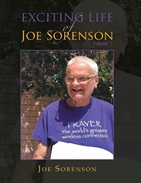
In Sorenson's touching book, which is part memoir, part poetry collection, he enthusiastically highlights the most meaningful moments of his life. Some are funny, some are heartfelt, and others are mournful. He introduces the book with an invitation to join him on a trip through time, on a life journey, and Sorenson's writing is immediately engaging, almost as if speaking with you in person, regaling the good and bad memories that shaped him. The ease of the narrative portrays Sorenson's affecting humanity, and one can't help but be excited along with him as he shares these significant moments.
The story begins in 1941 when Sorenson is born with a rare birth defect, leaving him blind. As a child, he is mistreated and relegated to a sandbox, but later finds support and confidence at a specialized school for the blind in Minnesota. From there, Sorenson notes his foray into radio as an adult, meeting and marrying his current wife, Ellen, his faith and service to the church, and navigating life with blindness from humble beginnings. The author's autobiography, albeit brief, primarily fills the first half of the book, with accompanying poems throughout. The rest of the book is composed of poems by both Sorenson and Ellen, who were inspired by Garrison Keilor. His first wife, Ginny, passed away in 2015 after years of failing health. "Going to Heaven" is Sorenson's poignant poem as a farewell to the woman he loved and lost.
Sorenson's book is a unique blend of poetry and memoir that leaves the reader wanting to know more about the author. However, the poems fill in some autobiographical gaps and are simple yet expressive, conveying Sorenson's innermost feelings and thoughts on various topics. Altogether, the book demonstrates a range of highs and lows in a storied life that's full of thanks and hopeful energy.