 |
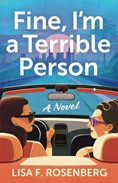
Leyla, a forty-something wife and mother, is unraveling. Her own mother, Aurora, insists on humiliating her before the other well-heeled grandparents during an assembly at the independent school her kids attend. The only decent night's sleep she's gotten in recent months involved a cocktail of valerian tea, GABA gummies, magnesium foot spray, and various other tonics. And she's begun to fear that her husband, Stephen, may be having an affair.
When she accidentally overhears Hallie Monrowe (a "trailblazer in the cannabis sphere" thanks to her THC toothpaste for dogs) boasting of having skied with Stephen during a recent trip to Aspen, Leyla suspects Hallie of having designs on him. Learning that he and Hallie plan to meet for coffee next week at CannaBizCon in Los Angeles, she resolves to attend the conference in secret to learn the truth, potentially bringing an end to her marriage. But after stealing a pass to get in, she inadvertently ingests granola bites laced with copious amounts of THC while chatting with an industry journalist and experiences a previously unimagined sense of love and euphoria.
Aurora, meanwhile, embarks on a quest of her own after learning that Esther Hmans, her father's eighth and most recent wife, has died. Her quest leads her to L.A. in hopes of finding that she has been left some money. She then attempts to liquidate the cemetery plot where Mrs. Hmans had expected to be buried, but is stymied when she cannot provide proof that the plot belongs to her.
Rosenberg's debut is one of the finest comic novels of recent years, a heartfelt but often bitingly funny examination of marriage, emotional abuse, hustle culture, and what it means to be Jewish and a woman in modern America. Within the first pages, it becomes clear that one is reading the work of a ferocious talent, deserving of a wider audience. Rosenberg deploys her observational skills in the service of a broader critique of society in a manner reminiscent of Dara Horn and Nathan Hill. In the course of the book, she lovingly satirizes art dealers, the cannabis industry, "inclusion initiatives" (the chair of one such initiative is "a cisgendered, heterosexual, blonde, blue-eyed, dead ringer for Kellyanne Conway"), corporate feminism, Facebook eulogies, our cultural fixation on pets, and the impossible demands of contemporary parenting. She also offers astute commentary on aging, antisemitism, jealousy, the joys and drudgery of marriage, the disappointments of middle age, and (like Tolstoy before her) the unspoken rivalries between mothers and daughters ("Once she got pregnant," Leyla reflects, "it became crystal clear that her mission in life to be the opposite of Aurora meant being a good mother, the best mother").
Rosenberg writes with the confidence and authority of a seasoned professional, deftly avoiding the lapses that mar so many debuts. There is scarcely a word out of place. The climactic scene in which Leyla prepares to confront Stephen is both wonderfully tense and darkly funny, a difficult blend of emotions to juggle, but one she handles with ease and finesse that could provoke the envy of less talented authors.
RECOMMENDED by the US Review
A 2026 Eric Hoffer Book Award Category Finalist