
 |
'Oh yes, get those to your mother'
Who he left 36 years ago
Fought for all her family heirlooms
Which he sold on the marketplace
One whole lifetime stuffed
Into awkwardly bulging pockets"
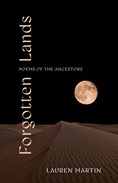
Encapsulating a range of emotions, Martin pours herself into a poetry compilation that becomes a microcosm of her life, both the tribulations and the ensuing resilience, as well as added commentary on the overall divisive state of the modern world. While the compilation opens with a hopeful haiku of floating butterflies, "I want" immediately contrasts the whimsical with intensity and cynicism toward the cliché that "happiness is what you make it." Overall, Martin's command of poetry is on point, whether through haikus or a plethora of figurative language, ranging from alliteration and enjambment to simile and metaphor.
Poems like "Whisper," where the speaker directly addresses her subject and responds with an internal thought in the following line, demonstrate a strong sense of creativity in exemplifying the magnitude of the message. The sting of betrayal and unrequited love felt by the speaker is present in numerous poems throughout the compilation. However, the artistic exploration permeates the cultural sphere, punctuated by the compilation's namesake, "Forgotten Lands." In this one poem, Martin employs the gamut of her poetic talents, delivering a back-and-forth dialogue in narrative prose that is simultaneously thought-provoking and a testament to how easily prejudice and judgment, in tandem with ignorance, create a chasm that only widens with time.
At its core, the poetry is fearless in ensuring that the main ideas come across clearly, whether that is the resilience in "I dream of Africa," or the unequivocal hate that has crept into society as demonstrated by poems like "Terry." More than anything else, Martin's work is an attempt to show the world its own reflection, both the good and the bad, entirely unfiltered. Digging deeper, it unveils a layer beyond the material world, an exploration into the spiritual realm and the divine. The poetry key at the beginning is an essential blueprint in understanding Martin's inevitable ode to Mother Nature and the celestial, astral spirits that encompass life and death.
From a stylistic perspective, Martin's voice is intimate and resonates, a feeling that pulls the reader into the work regardless of how it is structured in free verse, meter, narrative, etc. Its lyrical, harmonious nature is especially evident in poems like "My voice" and "Osun on Loving," both of which explore complex ideas of identity and spirituality with fluidity and grace. Similarly, Martin's work alludes to a sincere appreciation and prayer to the ancestors. "Letters to my grandfathers," is the epitome of Martin's ancestral connection, a poignant pleading to the Egúngún, or ancestors, for guidance in tackling the challenges of the world.
Ultimately, what makes Martin's work stand out is her ability to unabashedly explore intricate concepts and present them in both a creative and comprehensible manner, even to the layman poetry aficionado. Above all else, each poem in Martin's compilation, regardless of type or length, feels like an experience unto itself, a raw and authentic tapestry of her own life's challenges alongside those that are abundant in today's world. In essence, the author's collection is a significant contribution to the canon of contemporary poetry.
RECOMMENDED by the US Review