
 |
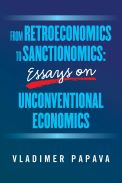
From Retroeconomics to Sanctionomics: Essays on Unconventional Economics
by Vladimer Papava
iUniverse
In academia, economics is the study of how best to meet people's needs within the context of limited resources. But this topic doesn't operate in a vacuum. Quite the opposite, economics intertwines so closely with the social and political environment that it requires an interdisciplinary approach. These essays go beyond classical economic theory to seek answers to real-world economic challenges. Books on classical economic theory are classics for a reason, forming the foundation of conventional economics. However, problems arise when economic theories fall short, such as during atypical economic crises like the COVID-19 pandemic. Unconventional economics, charting the dark corners of this map, attempts to address today's most pressing issues, such as the rise of a necroeconomy in what was the Soviet bloc, how to escape a retroeconomy, and the math behind the catch-up effect.
One of the collection's strengths is its credibility. These essays come from a published expert in the field of economics with more than thirty years of experience. Many also appeared in scientific journals or on analytical websites before the author compiled them here, lending them added authority. Relevant examples, such as Russia's invasion of Ukraine, show how deeply economics is connected to major news topics. In that case, the discussion focuses on the challenge of the West maintaining control over economic sanctions, especially as companies find ways to circumvent Russia-related restrictions. Another plus to this collection is that it addresses topics that many other books pass over, such as zombie economics. Despite the dense subject matter, the organization flows easily through short sections, with subheadings introducing the main ideas before each discussion. The collection is accessible to both the browser who wants to learn about a specific topic and pick one or two essays, and the deep explorer who loves to read cover to cover and study references.