
 |
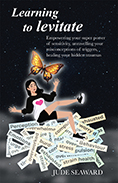
Learning to Levitate: Empowering your Super Power of Sensitivity, Unravelling your Misconceptions of Triggers, Healing Your Hidden Traumas
by Jude Seaward
Balboa Press
Originally trained as a learning disability nurse, the author first embarked on a career with the UK's National Health Service, then chose an independent path as a behavior analyst. Underlying the knowledge gained in her career was her own emotional disconnection and the childhood trauma underlying it. In order to assist others in understanding their own behavioral motives, Seaward had to revisit her "experiences and coping mechanisms" that she developed, leading to her feeling of being chronically misunderstood.
One strong message in this volume is that the book can provide a foundation for readers to personalize their psychological explorations in order to develop their own solutions, a process that requires unearthing their traumas as Seaward did. She suggests some people who have experienced serious traumatic abuse may need to work directly with a qualified therapist. She realized on her journey of self-discovery not only how the traumas of her childhood worked, but that she had also unwittingly passed her own generational trauma to her children. Sometimes the original trauma isn't even recalled but is built upon in "layers of experiences and coping mechanisms we develop."
Seaward uses the natural progression of chapters to build a logical progression of steps for understanding one's behavior, the triggers that cause emotional reactivity, and how to facilitate healing. The biographical exploration of the author's trauma sets the pace as an example of how trauma is acquired and how humans subconsciously react to their experiences. The writing is thoughtful, academically articulate, and yet accessible for the lay readers that this author's narrative will surely reach. With its many citations, a robust bibliography, and a suggested reading list, this book is a good initial guide for anyone seeking to learn how to effectively self-reflect and develop an approach to sorting through their emotional issues.
RECOMMENDED by the US Review