
 |
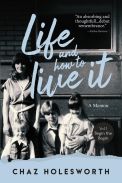
This book offers an honest and often painful look into Holesworth's childhood, shaped by an addict father and a born again mother whose devotion to religion becomes another form of pressure. The novel's greatest strength lies in its emotional core: the author's resilience. Even as he faces instability, neglect, and constant upheaval, he finds ways to keep moving forward. His earnest voice and his desire to understand himself amid chaos give the story a relatable coming-of-age foundation. Readers who appreciate memoirs centered on survival, identity, and the long shadow of family trauma will find meaningful moments throughout the narrative, especially in the way Holesworth tries to make sense of his parents' choices and the environment he grew up in. These themes align with trauma based storytelling and resilience narratives.
The story's emphasis on music is another notable strength of the book. It is clear that songs and bands were lifelines for the author, giving him comfort, escape, and a sense of belonging when his home life offered none. His passion for music lends authenticity to his voice and shows how art can serve as a survival tool. The heavy focus on musical references has the potential to come across as overwhelming for those unfamiliar with the bands or songs mentioned, but this may also prove to be a plus for those familiar with the music of the time. The narrative often summarizes events rather than fully exploring them. Still, the book succeeds in portraying a young man trying to navigate hardship with whatever tools he has: faith, frustration, and above all, music.