
 |
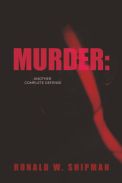
In a novel derived from his own career as a trial attorney, Shipman delivers a poignant fusion of murder mystery and courtroom thriller that adds an impeccable glimpse into the anatomy of a case. When Howard Graves enters the office of prominent attorney Garret Cole, he brings along a seemingly unsolvable conundrum: to investigate the coroner's ruling of suicide on his father's death certificate. On the surface, this appears to be an easily correctible error on the part of the coroner, but as Cole dives deeper into the case, two things become distinctly clear: nothing is as it seems, and there is a far greater conspiracy brewing.
From the outset, Shipman's knack for bringing the reader into the room is on full display. Through Cole's initial conversation with Howard, the stakes—a million-dollar life insurance policy—are set for a riveting legal adventure that begins with a rundown of details from the scene of George's alleged suicide. Almost immediately, the inconsistencies pile up, and with it a slew of questions punctuated by the elephant in the room: why did the coroner largely base the manner of death as suicide on the police report alone, especially when witnesses were present?
True to its saying, the devil is truly in the details. In Shipman's narrative, Cole becomes the medium through which readers retrace the sequence of events that lead up to George's death. In essence, when Cole returns to George's apartment, every minute detail, from all four burners being on to the charred metal bottom of the coffeepot, becomes a clue, and the audience is permitted to become investigators themselves. An aberration from the daily coffee routine between George and his friend upstairs, Drew Golden, certainly raises questions. Further, one must question why George was fully dressed and ready to embark upon a new day if his intent was to take his own life. Perhaps the most intriguing aspect of the novel is how Shipman uses timely planted details in the unraveling of this case, even before it reaches trial, to let audiences channel their own inner detective.
Shipman's experience with the topic is apparent in his ability to create realistic characters and highly believable circumstances. Interestingly, electrifying testimony and police interference in the case aside, readers become privy to George's younger days as a quarry boss, leading up to his last days. To that effect, the work is incredibly comprehensive, leaving no stone unturned in providing a panoramic snapshot of the case and its major players. Even as the narrative rounds the final corner and enters the trial phase, the opening salvo between Cole and defense attorney Henderson takes a compelling turn and gives the work an entirely unique perspective.
Shipman's work possesses the ideal concoction of deceit, cunning, and corruption, all combining to create breakneck pacing and undeniable tension, bringing to life a formidable foe that tests the unshakeable resolve of the protagonist. Above all else, Shipman's fluid writing style, immeasurable legal knowledge, and knack for plot development affirm a tantalizing reading experience that is as educational as it is entertaining.
RECOMMENDED by the US Review
A 2026 Eric Hoffer Book Award Nominee