
 |
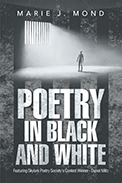
Poetry in Black and White: Featuring Skylark Poetry Society's Contest Winner - Daniel Miltz
by Marie J. Mond
LifeRich Publishing
Dejected without stories
Without inquiries about us."
The author's book is a stark and unflinching collection that offers readers a candid look into Haitian prison life. Mond curates poems that confront the physical, emotional, and psychological realities faced by incarcerated men living under extreme conditions. The collection opens with Daniel Miltz's "Shadow of Confinement," a rhyming couplet poem that serves as a powerful introduction to the harshness of imprisonment. Its imagery and rhythm immediately establish the tone for what follows: a series of poems that illuminate suffering, neglect, and the fragile hope that persists even in confinement.
Many of the strongest pieces in the collection explore the devastating impact of bureaucratic failure and overcrowding. In "The Lucky One," a man's release is delayed for five years due to misplaced paperwork; he sleeps in a hammock among sixty men, survives on flour and water, and ultimately dies before ever seeing a judge. The poem's final line, ... He was lucky. Most die before seeing the judge,... underscores the brutality of a system where death can seem preferable to continued imprisonment. Poems like "Prison" and "Dance with Me" delve into the mental deterioration and physical decay caused by malnutrition, isolation, and relentless hardship, aligning with themes of carceral trauma and human rights literature.
Yet the collection also acknowledges the resilience of the human spirit. "The Mango Tree" reflects on the longing for freedom and the mind's ability to escape even when the body cannot. While some poems resonate more strongly than others, the collection as a whole succeeds in offering readers a vivid, unsettling, and necessary understanding of life inside a Haitian prison.