
 |
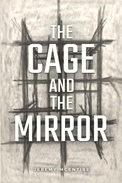
The Cage and the Mirror: How to Make Rigid Organizations Resilient Again
by Jeremy McEntire
Cage & Mirror Publishing
Using the cage-and-mirror metaphor, McEntire meticulously takes readers beyond what is discernible, diving into the anatomy of an organization and the variables—conscious or subconscious—that either set it up for success or for imminent failure. Through a series of anecdotes, organizations from business to healthcare are dissected to reveal the catalyst that keeps each constrained.
McEntire's work is simultaneously profound and simple. His anecdotes come across clearly to even the layman. Further, he leaves no stone unturned, guiding readers seeking a more technical breakdown of the cage-and-mirror philosophy to review his technical papers at cageandmirror.com. More than anything else, the work is a thought-provoking rabbit hole that directly juxtaposes hollow metrics and performance ratings with the marker of a genuinely successful, impactful employee.
At every turn, the author explains complex workplace dynamics with relatable terminology that sticks. For instance, the work examines well-intentioned supervisors who disrupt an employee's workflow in the name of the system or the go-getter who is loud and present in all the key moments, earning that big promotion while the consistent craftsman goes unnoticed. McEntire especially highlights the glitches that often fall to the engineering team to rectify, without the scope or infrastructure to execute the necessary designs within the cage's limitations.
Whether it's the supervisor disrupting an employee's seamless dish stacking system or the stubborn management team that goes to great lengths to disregard their administrator's shortcomings in the name of seniority, McEntire's examples pave the way for the mirror, his concept that allows for adaptation within the cage, to bring understanding to the overall organizational infrastructure. What makes McEntire's work stand out in the realm of organizational leadership is his natural ability to connect readers' experiences with the cage-and-mirror dichotomy in the workforce.
Digging deeper, the author probes into the multiplicative value problem and its effects on the revenue stream. Framing it as a revenue-at-risk calculation, the work highlights one of the most fundamental cost constraints by depicting water, a plentiful resource, amid a drought. It is only when that product's presence is dwindling that its true value shines, necessitating action and adaptation through the Mirror. Interestingly, the water comparison is applicable to much of the workforce. Far too often, one thinks that it is the leadership at the top of the hierarchy that sustains the overall product and business, but, as evidenced in McEntire's work, an ordinary janitor, invisible to all, was a key cog in the business running without a hitch. Only when he retired did the inventory-tracking gaps come to light. To that end, the author shares one of his personal exercises he uses when leading his own engineering team: an energy exercise aimed at identifying what fueled his team's passion and what made "time disappear" for them. At the same time, he aims to understand what his team finds draining, regardless of the results or success that the effort may generate.
At its core, McEntire's work is highly thought-provoking. Thousands of employees meander through their day, mired in soul-sucking jobs with inconsistent leadership. This work is a synthesis of workplace anatomy with near surgical precision. The most granular level of McEntire's efforts can be distilled into a map, a vision for what was intended to run an efficient and functional organization. Ultimately, the author challenges the reader to engage with his work at the level of vision. McEntire is not simply out to seek a solution (they'll come) but rather to cultivate a growth mindset and a shift in vision that provides greater understanding of how to work and design within the Cage. Insightful and enriching from start to finish, McEntire takes dry, complex concepts and spins them into a relatable narrative that all audiences can connect with.
RECOMMENDED by the US Review
The 2026 Eric Hoffer Book Award Business Category Winner
Next Focus Review
Previous Focus Review