
 |
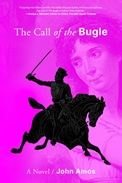
The infamous charge of the British Light Brigade on October 25, 1854, receives an imaginative take in this curious account, narrated by a fictitious war correspondent for the Times (London). The newspaper correspondent and his fellow reporters are on the ground in Balaclava, Russia, preparing to view this tragic charge in the Crimean War. Told in the first person, the chronicle never shares "the newsman's" name, but many hints suggest that he is a fictional version of Dublin-born reporter William Howard Russell, whose war reports inspired Alfred, Lord Tennyson's most famous poem, "The Charge of the Light Brigade."
The newsman relates deplorable conditions in Balaclava: "The city stank of rubbish and excrement, and flies buzzed everywhere." A weeping Russian woman, tiny infant in arms, begs his aid. The reporters proceed to the relative safety of a farmhouse, from which they witness the attack of the ferocious Highlanders, with bagpipes accompanying their successful "Thin Red Line." The newsman hears Lord Lucan curse the troops' orders from on high to charge the Russians. And suddenly, an older man in "a blue general's uniform" catches Lord Lucan's arm. Incredulous, the newsman observes the general ask for permission to ride with his old regiment. "Do you really want to ride down the Valley of Death?" Lord Lucan asks General Dryden. "I do, sir," General Dryden replies.
"What hidden motive drove him to ask for almost certain death?" the newsman ponders. Amos seizes on this question, and the nameless newsman searches for answers with obsessive curiosity over the course of years. His partner in crime and in romance is Emily, the keeper of the "morgue," the newspaper's institutional memory. Between his dashes to report on various wars, she provides leads about who General Dryden was and why he rode "happily to his death," for die he did, along with his black horse, when the bugle sounded the disastrous charge.
Although in real life, no general named "Dryden" fought in the battle, and no nameless newsman became obsessed with an old officer begging for a chance at redemption, these fictional additions form the impetus of an engaging story. Skillful dialogue and sparse yet emotive prose drive the tale of a newsman driven almost to madness in his quest to write a biography of Dryden's life. The fever intensifies when Margaret, Dryden's younger daughter, lends her father's diaries to the newsman. The diaries breed madness in the reporter's blood: the smell of honeysuckle wafts from the pages of the general's lifelong journals; a presence hovers over his shoulder; breezes from the unopened windows tickle the curtains. He feels his life is merging with the diaries, his career as a rising international journalist in lockstep with Dryden's different yet similar trajectory. Amos tinges the atmosphere with sadness, employing well-placed lines from the poets Blake, Shakespeare, and Tennyson.
Continuing his quest after losing a finger during a tour in India, the newsman visits Dryden's boyhood home in the Cotswolds, where a childhood friend reveals a motive for Dryden's bravery. Fresh from a bloody news tour in China, the newsman discovers a note from Edgar Allan Poe in Dryden's diaries, about "strange mirrors" and a "slow descent into madness." Amos smudges the lines between the newsman and Dryden, until the owners' tales blur and merge in a growing intimacy between the living and the dead. Who is writing what, and are the ghosts of memory real?
Along the atmospheric road that leads to and from the charge, Amos brings alive important qualities of Britain in the latter part of the 1800s. British society was class-based, and the newsman was a low-class man from Ireland. Britain ruled the world and saw it as its duty to civilize it. In contrast, Emily and the newsman often go for morning drinks in the local pub (not ladylike behavior), and he becomes slovenly. Britain emphasized duty, moral fiber, and hard work. Men were supposed to pursue the gentlemanly professions, like the military, not books and flowers, which Dryden preferred.
Amos excellently depicts the steep consequences when a writer becomes bewitched by a story. This tale begins with a newsman who wonders why an old general rode willingly to his death in the fatal charge. Weaving together the lives of both men with Poe-like techniques, the tale takes over the teller for an entertaining story of duty, romance, class, the supernatural, and obsession.
RECOMMENDED by the US Review