
 |
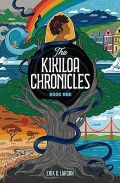
The Kikiloa Chronicles: A Literary Science Fiction Novel of Time Travel, Magical Realism and an Irrepressible Mitochondrial Eve
by Erik D. Larson
Kikiloa Press
Freckles tell a story—that is, they do for Kikiloa. As the mother of humanity, she counts her daughters by the freckles dotting her body, down her arms, hiding on her ankles. In the present-day, best friends Hazel and Kiki, for short, scramble up onto a ledge along San Francisco's cliffs. Kiki is about to tell her friend an important secret she's kept all this time. The pages of Hazel's journal bottle up Kiki's zingers in doodles like a time capsule. But an ominous figure lurks at the top of the cliff, above the ledge. Kiki disappears. In snapshots through time, Kikiloa's story unfolds, not only in the present day or the years prior, but in the hundreds and thousands of years before.
Kikiloa at first feels like Gaia, a mother in Greek mythology, rising up before current generations blinked open bleary eyes. Moana, the movie franchise, traces the curves of Te Fiti, a goddess who slips into sleep as an island. However, unlike Gaia or Te Fiti, Kikiloa makes choices, not as a side character in a larger epic, but as a main character in the story. Kiki acknowledges her old patterns, which are tough to shake, a key piece of how her character develops and becomes more self-aware. The atmosphere and setting often combine to act like a character in their own right, merging with Kiki herself at times and showing that islands aren't a static backdrop but something tangible in and through us. The writing mirrors Kiki's personality, including unexpected turns or zingers, a contrast of daily life and time's vast expanse, and a mystery right out of reach.
RECOMMENDED by the US Review