
 |
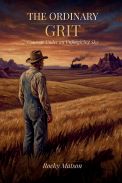
Alternating narrators and a carefully threaded storyline weave this book's characters together. It opens with Elias, whose land has been tainted by a surveyor's spike. Next, Eleanor, who knows the conversations about the railroad are not her place to enter, shares her story, recognizing that things in her little town are about to change. Throughout the town, wells are running dry, too, making life equally difficult for the town's inhabitants. When Voss, the chief surveyor, begins visiting the locals and offering them money for their land, people like Elias must take stock of what they value—land or cash. As tempers heighten and newcomers threaten a distinctive way of life, the characters in this book look inside themselves and to each other for help. Ultimately, however, they know that the prairie has a law and way entirely its own.
Matson's novel covers an often overlooked period in American history. Characters like Elias embody a spirit that one rarely sees today in real life or in fiction. Elias takes a stand against the chief surveyor, Voss, to protect his land and family. He also carries a deep connection to the land. This is most evident when the chief surveyor first arrives and offers Elias a significant sum of money, more than what Elias has made in five years of farming. However, while the money is a huge temptation, Elias turns it down, telling the surveyor that he knows that the railroad company will destroy his field and then the land surrounding it with smoke and grease.
Elias also proves himself to be a keen, almost Transcendentalist, observer. One of his observations about the drought's consequences is almost poetic. He says that the Badlands "don't apologize for themselves" and that "the soil turns to red clay and powder, the wash of alkali bleaching the rocks white as old bone." He continues, observing that during a drought there is "just the land showing you what it looks like when the water is finally gone—the honest face of the earth with nothing left to hide behind." His awareness about the land and how it functions shows the deep connection he has with it. This deep connection to the land makes him a sharp juxtaposition to characters like Voss, who embody corporate greed and extortion.
This book adeptly captures the harshness of America's expansion and the homesteaders who contributed to its history and backbone. In this, the book truly captures the grit required to survive during this time period. It also shows the fortitude that early settlers possessed and passed on to future generations. More so, the plot resonates with today's ongoing discussions about land use, corporate greed, and the preservation of landscapes throughout the United States. For those who are interested in the American West and prairie life, this novel is a page-turning read that transports them to America's wide expanses. While Elias is the standout character, the other characters are well developed, too, making this a well-rounded story. It is a fast-paced read that leaves the book's audience wanting more.