 |
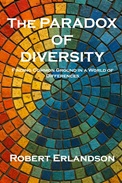
The Paradox of Diversity: Finding Common Ground in a World of Differences
by Robert Erlandson
Circle Publications
flooding fields and villages
leaders turn aside
difference, if not cherished
drowns us in neglectful tides"
This book is filled with illustrations, commentaries, and poems reflecting on how religious, political, and social identities influence local, national, and global identities and policies. It examines how, when "crises appear / leaders meet with folded arms" and give "speeches but no acts." It encourages individuals to set aside their social, cultural, and religious differences to build better communities and, ultimately, a better world. Some of the verses even go as far as to examine how the way children are raised influences their future approaches to dealing with others, resolving conflicts, and contributing to their communities. Ultimately, this book guides its audience on how to trust "the gift of difference," which leads to people having "no fear in the heart."
What is really unique about this work is that it dissects and comments on a multitude of topics, including religious intolerance, extremism, Christian nationalism, and social exploitation. It also poses helpful ideas about learning to "value difference rather than fear it." The key, as the author explains, is to honor differences and embrace the colorful canvas that differences paint in our lives.
The text offers valuable philosophical and life lessons in a very innovative way via brief, impactful haiku and haiku-like poems. Individuals encounter useful, readily applicable philosophies for interacting positively and openly with others: "new words on the wind / turn strangers into neighbors / if ears remain free." Other verses encourage interaction and positive coexistence: "we forget / that two voices in chorus / make harmony grow." Similarly, others remind people about the negativity of and danger of remaining silent: "hate burns in silence / unvalued difference feeds / fire in the shadows." These verses are easy to remember, too, which means people can memorize them and carry them with them as little mantras for daily living.
Colorful, thought-provoking illustrations accompany the poems and the commentaries. These illustrations provide a visual journey that mirrors what the poems and commentaries communicate. They also provide a different interpretation of the issue the book addresses. These visuals, such as "Figure 4: Sharing warm bread soup," emphasize the power of collaboration and of community, especially during times of need and hardship. These images leave long-lasting impressions. They are carefully placed throughout the collection, often emphasizing certain passages and verses. Other illustrations, such as "Figure 7: World of plurality," show how encouraging young children to embrace one another's differences creates a more beautiful existence for everyone.
For those seeking a positive guide to understanding others and living a more fruitful life that accepts, encourages, and celebrates diversity, this book is a unique tool for cultivating new ideas. It is a great book for individual self-improvement, family discussions, and group and church workshops. Its message about finding, uplifting, and nurturing humanity and remembering that each person is "equal in the light" in a very dark world is one that is not only greatly needed but also one that will resonate with numerous people. This is a potentially life-changing book that offers a unique, light-filled path forward.
Erlandson's Avian Art was a 2025 Eric Hoffer Book Award da Vinci Eye Winner.