
 |
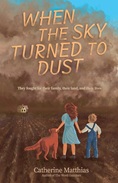
Life on the plains is hard for the Dolan family. In Matthias' moving novel, she illuminates the 1930s Dust Bowl through the eyes of twelve-year-old Caroline. Witnessing the ceaseless intensity and challenges of a landscape ravaged by drought and storms that fill the skies in "Corn silk yellow," orange, or sometimes "a pale sick green," Caroline grows up faster than expected at her age. Alongside her is a nine-year-old brother, Daniel, and the close siblings depend on each other as they experience a childhood that transcends any normal childhood. Even from the opening page, the two wake to what appears to be a happy midwinter morning that quickly shifts into a stark reminder of what they face each day. Amid constant dust storms, they complete necessary chores around the farm and walk to school, where even then they are subjected to the fearsome storms that rattle the shutters "like a hundred galloping horses." At home, the "silky, talcum-fine dust" is ever-present, and their youngest sibling, Nell, is a baby already rasping and coughing up "gobs of thick, brown drool."
Although the Dolan family is seemingly in a better position compared to other families, they still grapple with the same struggles and financial hardships as anyone else. Papa does all he can to remain a steady presence, instilling a sense of calm and assurance. But tough decisions are made, and Mama departs for New York to live with relatives and keep Nell and two other siblings safe from the dangerous dust. In their Mama's absence, Caroline assumes the added burden of fulfilling a motherly role—cooking, cleaning, and helping Daniel and Papa with the farm. But it's a never-ending battle with failing crops, storms, and death. The Dolans cannot escape these harsh realities.
Matthias is a skilled writer whose tender, coming-of-age narrative touches on themes of family, love, loss, and grief set against the backdrop of one of the most traumatic ecological and economic disasters in US history. Matthias is especially adept at painting a striking and believable portrayal of Midwestern life during the 1930s, steadily approaching the pivotal Black Sunday, when one of the largest storms ever recorded in American history swept through Kansas, devastating it. When tragedy strikes, Caroline and her family confront a turning point in their family's lives and come together in strength during their time of grief. And grief is one of the overarching themes that runs through Matthias' book. While it is a heavy theme, it is an important one that helps teach young readers about life's sometimes unpredictable misfortunes.
While Matthias' story may initially come across as bleak, it is a surprisingly warm and uplifting read, focusing more on how the members of the Dolan family love and rely on each other in times of trouble. It is engaging and refreshing to read, and while aimed at a middle-grade audience, it is still appealing enough for readers of any age. The narrative shines with the historical details and persistent reminders of the dust-covered world the Dolans and others inhabit.
This historical novel is notably the winner of several recent book awards, including the 2026 Eric Hoffer Award, and rightfully so. Matthias' story is well-researched and full of rich, vibrant details, lending authenticity to the hardships faced by families struggling to survive in Depression-era America. At the back of the book is a dictionary of historically accurate terms used throughout the narrative, a nice touch for younger readers who may be unfamiliar with them. Also included is a familiar ballad that Matthias incorporates to pay tribute to the Dolan family and honor the loved ones they have lost. By its end, Matthias' absorbing tale gives modern readers much to be thankful for.
RECOMMENDED by the US Review
A 2026 Eric Hoffer Book Award Grand Prize Short List book