
 |
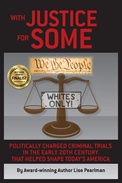
With Justice for Some: Politically Charged Criminal Trials in the Early 20th Century That Helped Shape Today's America
by Lise Pearlman
Regent Press
The United States is approaching its 250th anniversary, and the country's progress has come with more than its share of growing pains. The country has prospered from its eclectic population, yet for a lengthy duration of its existence, a variety of minority groups were marginalized and subject to inequalities, whether it be with respect to rights and/or livelihood. The courtroom often reflected the stark disparity between the privileged and the disenfranchised. The criminal justice system in the United States has evolved over time with the iconoclastic rulings of the Warren Court and the passage of civil rights legislation, but the preceding period was marked by numerous miscarriages of justice.
The twentieth century is often considered the most violent, yet the causes for certain brutal events are often downplayed. In 1901, President William McKinley was assassinated by Leon Czolgosz, an avowed anarchist. While many wanted swift retribution against the activist, few took notice of the incendiary rhetoric that may have enabled McKinley's shooting, particularly from the newspapers owned by William Randolph Hearst. Sensationalized headlines ("Yellow Journalism") captivated the public and was good for Hearst's bottom line, regardless of consequences. Similar inflammatory rhetoric in the media would condemn Czolgosz before he stood trial, the death sentence he received a foregone conclusion despite questions of Czolgosz's mental competence.
Whereas Czolgosz's competency wasn't reasonably considered in his case, the trial of Harry Thaw for the murder of Stanford White was another matter. Harry Thaw was obsessed with Stanford White and his relationship with Thaw's wife, Florence Nesbit. Thaw's actions before the murder hinted at premeditation, yet Thaw's previous erratic behavior towards Nesbit, White, and others illustrated a disturbed mind. Thaw came from a wealthy background and thus was able to afford top notch legal minds who helped him avoid a death sentence through temporary insanity.
Intolerance and ignorance often fueled the most egregious of legal injustices, as in the wrongful arrest of Ed Johnson for the rape of Nevada Taylor in Chattanooga in 1906. Implicated by the word of a tipster, Johnson maintained his innocence yet this didn't deter the local sheriff, prosecutor and judge from colluding to ensure Johnson's conviction. When the Supreme Court sought to hear Johnson's appeal, mob justice stepped in and lynched the innocent man before the will of the state was subverted by the government. A similar vigilantism occurred in Atlanta as Leo Frank would be strung up by a vengeful crowd for the sexual assault and murder of Mary Phagan. The evidence against Frank was considered circumstantial at best, yet the anti-Semitism that factored into the mob's actions was almost undeniable.
The thirteen front-page cases in this excellent volume highlight the contrasts in justice throughout the twentieth century. While there has been much progress since the country's founding regarding civil rights and defendants' rights, reactionary politics and rabble-rousing headlines have played a role in stunting further advancement. However, many states have either outlawed capital punishment or placed moratoriums on the practice, and views on juvenile punishment have changed for the better. The topic is profound yet necessary to discuss, as the absence of law leads to chaos and the perversion of law leads to authoritarianism. This is an exemplary study of how a flawed system has existed, changed, and must continue to change for the benefit of its people. The author's words reflect an erudite legal mindset while also evincing compassion and humanity. As recent Supreme Court rulings and the ideological mindset that influences them are discussed in the media, a book from a veteran jurist delving into controversial and impactful cases becomes essential reading.
RECOMMENDED by the US Review