
 |
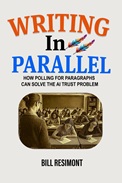
Writing in Parallel: How Polling for Paragraphs Can Solve the AI Trust Problem
by Bill Resimont
Prevalent Publishing
Examining a concept rooted in ancient Greek schools, this book encourages its audience to become more knowledgeable about what it means to write in parallel. It examines how multiple independent writers responding to the same prompt is an inherently straightforward concept. However, the text examines how such a practice deeply enhances one's knowledge base and collaboration skills. It also poses multiple ideas about the concept of authorship while explicating writing across parallel philosophies in relation to artificial intelligence, teaching, government, and marketing.
Resimont shares his own experience of writing in parallel and how he unknowingly practiced this concept even during his early educational years. For example, the author explains, "We shared the same assignment, the same deadline, and even the same silence, yet our words unfolded independently. What felt then like a rushed exercise in survival was, in truth, a collective experiment in multiplicity." Thus, these personal anecdotes help the book's audience understand that the writing-in-parallel concept is not as obscure as it may seem and that, in reality, many people have been participating in the practice without realizing it.
The author then introduces how writing in parallel can revolutionize polling. It could be used as a "powerful tool" because rather than "just giving people multiple-choice questions, you can pay them to write short compositions in their own words and then have them submit the compositions to an online portal." Resimont argues that writing in parallel would be a huge benefit to polling because it would capture minority opinions. Subsequent chapters examine the challenges writing in parallel faces as part of the polling process.
Another interesting aspect of the writing world that this book carefully examines is how little writers are compensated for their work and their words. The text argues that writing is a professional asset and that society and the educational institutions need to "flip the script" about how writing is taught and how writers are compensated. This flip would model for students the necessity of writing in their personal and professional lives and also "models for students what a writing economy looks like." The author believes that this change would "rewire" the entire educational system by teaching individuals that writing is more than "a favor, a hobby, or a classroom exercise." Thus, the text's inherent argument is that by implementing writing in parallel, education systems and governmental agencies also offer themselves an opportunity to become more efficient and to modernize, especially in light of the artificial intelligence boom.
For anyone interested in the many directions the writing field may take due to technology and artificial intelligence, this book is a necessary read. The personal anecdotes combine with the philosophical ones to create an accessible and engaging book. The rhetorical and analytical elements also enhance this accessibility. This book can even serve as a strong guide for composition instructors and the classes that they teach, because the ideas it poses about writing in parallel are easily implementable in composition courses everywhere. The author's unique work will likely interest anyone concerned about ways to enhance educational methods in a changing world and the future of writing in general.