
 |
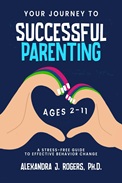
Your Journey to Successful Parenting: Ages 2-11, A Stress-Free Guide to Effective Parenting
by Alexandra J. Rogers, Ph.D.
A Rogers Books
No two children are the same, and so it stands to reason that no two parenting journeys will follow the same trajectory. Every parent will, at some point, face behaviors or responses that leave them scratching their heads, unsure how to proceed. For children ages two to eleven, this book offers a spectrum of best practices to help parents and children live in a more loving, harmonious environment. It teaches parents how to identify what children are doing and interpret the meanings behind their actions, and at the same time gives them the language and methods that children will respond to, helping them understand why things are the way they are regarding homework, bedtimes, and family dynamics.
Using communication skills, observation, behavioral charts, and reward systems, this guide offers parents a complete toolbox to help their children become successful, confident members of their families, classrooms, and society. This book does not claim to be a one-size-fits-all factory assembly line of child psychology, and it gives careful consideration to the different challenges children may face, including learning difficulties, disabilities, emotional control, and other developmental differences. Parents are urged to consider their options and experiment, if needed, to find a style that suits not only their children but also their own parenting attitudes and style. Compromises will need to be made on both sides, but the outcome of having a child who is thoughtful, follows instructions, and doesn't argue or melt down into tantrums is something any parent can appreciate.
The author's decades of experience as a clinical psychologist make this more than a collection of academic suppositions. Instead, it offers parents a realistic, functional, actionable way to see changes in their children's behavior. Solutions are tailored toward specific manifested actions, working out the root cause, and making allowances and consideration for different outcomes or circumstances in a child's mentality. Once the basic methods for behavioral adjustments are presented and taught to the reader, an entire section of the book is dedicated to common grievances and headaches that parents face when raising a child. This allows parents to compare these examples to their own child's frustrations and aggressions and figure out exactly what's going on in their social life, academic studies, or mental health.
This is not a book about manipulating children into behaving or tricking them into doing what adults tell them. At their core, the methodologies on offer here are about identifying when parents need to give children undivided attention and love, and reinforcing good behavior with recognition and praise. A great deal of respect and care is reflected throughout each scenario, and the child is given ample opportunity to open up, be vulnerable, and learn how to express themselves and understand their own emotions. While it may not cover every specific circumstance or outcome, this book teaches a love language between parent and child that bridges development and helps every member of the family grow closer and more considerate toward one another. For parents who want to address problem behaviors without making their child feel resentful, problematic, or inadequate, these gentle yet consistent techniques offer a lifeline in times of confusion or hardship.
RECOMMMENDED by the US Review
A 2026 Eric Hoffer Book Award Category Finalist