


 Author Spotlight
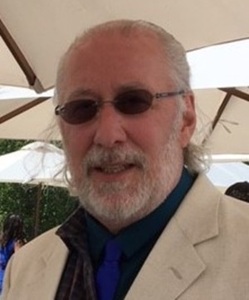
Peter Jacob Streitz
My sister—who is a reluctant storyteller at best—revealed to me a family history about a Christmas gathering when I was between three and four years of age. After routinely introducing my other three siblings to the celebrants, my unassuming mother pulled me to the side of her sofa chair, solemnly crowned my head with the palm of her hand... and formally announced to all... "And finally, this is Peter—my serious little boy." And I was odd. This (I've grown to believe) was congenital. That's why my work is so inherently unblinking. For it heeds the credos and convictions of those I was paradoxically reading as a budding jock, an All-American Boy. Meaning Eric Hoffer, Hannah Arendt, Wilhelm Reich, Alan Watts, Carl Jung and, of course, that giant of philosophical thinkers, Holden Caulfield. Thus, I have no tribal point of view. I write from the outermost battlements (or watchtowers as Dylan calls them) of this fortress called earth. I merely report the happenings of the invaders and sheltered alike... with no mingling in between... especially with the gatekeepers. Consequently, this iconoclastic umbra of mine (often called dark humor) equates with my hereditary seriousness of seeing both sides of the same coin of life—all its light and dark, good and bad. Because like the world-renowned (or if you're a Nazi, degenerate) artist, Paul Klee, once said, "Only painting the pretty is like doing mathematics with only prime numbers." Therefore, we could say, my prose and poetry are colored with composite numbers, same as two and two equaling four. For only prime and composites (together) equal zero cognitive dissonance or plausible deniability.
I wrote The Worm Farmer prose-poem novel because I'm heavily affected by an irreverent personal opinion: that oil painting is the only true art. And when I write I think of my work as a painting... usually a Francis Bacon. But this time around I wanted a Caravaggio. So, I used prose's single most powerful voice—the omniscient—as spoken by the Holy Trinity. With one of the narrators having total disdain for any and all terrestrial matters, another an affection for this earth, and the third couldn't care less one way or another. This isn't an unreliable narrator—it's the quintessential controller of all things. Accordingly, it cares nothing about dogmas, holy books, catechisms, social graces and/or sanctimonious dictionaries of either the Right or Left. As they're (the ME of three) too jaded and have seen it all... since the primordial ooze oozed—after The Big Bang—a happening they view as an inside joke of a spiritus impregnation... of a telluric virgin. Anyhow, I decided that due to a million books being prettily plotted and adorably sagacious, that I'd strike out on a parallel, unpaved path . . . one lined with strip joints instead of B&Bs... greasy spoons opposed to fine dining... and truths with small t's versus capitals. With capital T's dead-ending all roads. And nirvana only knows that in this day and age of ouroborian insanity a new philosophical take must be developed... to confront the neurodivergent modes of cognition associated with AI... and/or the Stone Age. I wrote Past Oz... Land of the Misbegotten to find a voice for oneself in the upcoming world of machine intelligence... by writing about the only landscape I knew at that time, Big Business. Particularly during the halcyon days of the computer industry. And the molding of an Informational Age psyche. Leading to that archetypal World War on the human dynamic of mainframe versus personal computers. It was the same anima that divided rock-fans of the Stones and the Dead, only in dollars and cents. Past Oz was the battle of the bands for my main character, Shields Tarry. With the ultimate prize being the one hit wonder of saving himself with either fame or fortune... or a pauper's oblivion... an unfeigned melody that would score his life from there on—either in or out of the corporate world. Like most aspiring executives he only knew the ladders to be climbed. Always assuming the skies of success would be true blue. But what if the ladders begin to wobble... for unknown reasons? Can you get off, losing all your power and prestige? Even if jumping—committing professional suicide—may be the only way out. Far easier said than done. This is the existential question (sans any real wisdom) that haunts every rising star. Henceforward, the road Past Oz is one person's struggle to find an escape, regardless if it's paved with brick... or gold.
I'm currently working on a new manuscript of poetry. My fifth Bar Bible titled Screw Sonnets, dedicated to Edna St. Vincent Millay. And I would like to mention that the phrase "the pen is mightier than the sword" might want to be rethought in this epoch of Podcastian Information. And that's a terrifying thought. But I sensed this petrification well before the turn of the millennium—as the streets of "Ol' Frisco" twisted from the BEATS' road... to the back alleys of a nightmare. With all the psychosis and distemper of a Hieronymus Bosch painting lining the way. Within this dystopian setting, I'd frantically write letters of alarm to the editors of local newspapers (prior to the S.F. Chronicle ghosting me for being a fabulist crackpot) and stand before the City Council, yawling the clarion call of William James' (an American philosopher and brother to Henry James) major trepidation and warning—paraphrased: That Rationalist—and Rationalism—enlightenment did a super-swell job getting rid of Sun Gods and the darkest ages, but that he "feared" in their rationalizing that they would totally ignore, lose sight of, or worse yet, belittle, those of Human Nature—the irrational, like love and hate. And that's exactly what was playing out on the streets of San Francisco. And it's that ignition of wisdom that sparked the Bar Bibles in me, and eventually, The Worm Farmer. That the learned were becoming more and more abstractionists than rationalists, separating themselves (ever further) from the realities of the working class and/or the street. And as a result, the common language in the USA—American English—is spoken in totally different tongues by frightfully polarized groups. It's over this gap in communication that I've tried to build a bridge. Whether it's built of stone or gypsum board is for the readers to decide... be they Hoffer's True Believers or Salinger's Doubting Thomases.
I've had two of my Bar Bibles—No Words, Just News, and Hellfires Shake the Blues—insightfully and favorably reviewed by the US Review of Books. And besides the wondrousness of the first editor of my American "street" poetry—who happened to be a Jacob Sheep shepherdess from Warrington, England, who grew up steeped in classical poetry—the two US reviewers gave such deeply discerning and perceptive reviews it was as if the verse came directly from their own psyches. The understanding and interpretation doesn't get any better than that!
About the Author: Peter Jacob Streitz is from up-state NY. Upon receiving a full athletic scholarship—that he rejected—thereby counter-culturing his way into an obscure degree in "Alternative Education" at Boston University. His accreditation was an in-depth dive into 1970's social services: involving STOP THE WAR, bussing, and childcare. Plus, a stint as a "Repo Man," which primed his low-tech resume for his hi-tech rise in the corporate world. Troubled by his career arc, he left for San Francisco to pursue writing. Heeding a Lit professor who wearily advised a beatific assemblage... that the only way to be a writer... was to live the life of one. So, he plunged into the city's dives and hellholes. And there, with the barfly-philosophers who haunt these spheres—he lived the life of a novel by composing one and four books of verse. After thirty-four years, he headed to Hudson, NY with Donna, his beloved wife.
Books:
- Past Oz... The Land of the Misbegotten
- The Worm Farmer
Bar Bibles of Poetry:
- Hellfires Shake the Blues
- No Words... Just News
- No Church Nor Pew
- A Psychic Autopsy
Author Spotlight is an author interview exclusively for The US Review of Books and available through the Platinum Plus Review service. Author Spotlight interviews may be reprinted with full attribution to "The US Review of Books." |
